Category Archives: Facebook

USA Today: 750 photos per *second* uploaded to Facebook

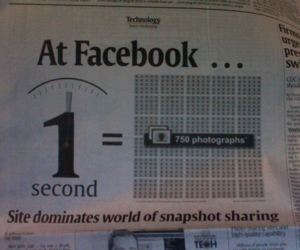
usatodayfacebookphotos.jpgIn today’s USA Today was a story which was posted online as “Facebook’s ‘tagging’ option is a big hit with photo sharing” … but I preferred the print headline:

At Facebook… 1 second = 750 photographs

By whatever metric you want to use and whatever headline you like, the number is rather staggering. Consider the larger numbers mentioned in the article:

Some 2 billion photos a month — or nearly 70 million a day — are uploaded to Facebook. By comparison, Yahoo’s popular photo site Flickr gets 3 million uploads a day.

Two billion photos a month. Given Facebook’s recent news of crossing over 300 million users, that’s roughly 7 photos per month from each user. Considering that many of those 300 million users are “casual” users who may only login occasionally – and in some cases very occasionally, it’s probably much more likely that a smaller core of people are uploading larger numbers of photos. Again, however you measure, it’s an amazing number of photos.

The USA Today article talks about the “tagging” capability within Facebook as driving this growth in photo uploads. That may well be a contributing factor, but for me a large part of why I’ve uploaded photos to Facebook is:

Simplicity

It’s incredibly easy to upload images into Facebook, either through the website or through mobile apps like the iPhone app. Right at the top of your Facebook login screen is this:

facebookphotosharing.jpg

Right in my iPhone app is the ability to take a photo and instantly upload it. I’ve used this on a personal level to upload various photos I’ve taken directly into my Facebook account. On a business level, I used this a great deal at a recent trade show and uploaded the photos directly to Voxeo’s Facebook Page. It’s simple and easy. It’s also incredibly easy to organize the pictures once they are up in Facebook.

It’s also easy to upload pictures and organize them in Flickr, too, but I do admit that I’ve found myself doing that less and uploading to Facebook more. A large part of that is the new Facebook app on the iPhone which is a great all around app. (And no, I haven’t tried out the new Flickr app yet.) I do admit, though, that there is an element of truth to the USA Today piece… part of the allure of uploading to Facebook is the social element and how others can easily see and comment on your photos.

Again, though, amazing stats in terms of numbers of uploads…

Re-examining how I use Facebook – and again the blurring of our lives

facebook.jpgWho do you “friend” on Facebook? And how do you resolve the tension between private and public interaction?

It’s funny how synchronicity works some times. Last week I was thinking about writing a post about how my use of Facebook has changed – or perhaps will change… when a note in my Twitter feed pointed me to a post from Michael Hyatt called “Re-Thinking My Facebook Strategy” which hit many of the points I was thinking about writing.

MICHAEL HYATT’S DILEMMA

Hyatt, who is CEO of Thomas Nelson, Inc, hits one of the central dilemmas relating to our online networking – the incredibly loose way in which we use the word “friend”. Leaving aside all the English teachers rolling over in their graves at the way we are now using “friend” as a verb (ex. “I wasn’t sure if I should friend him.”), Hyatt provides a useful taxonomy of the types of people we interact with online:

  • Family: These are the people who are related by blood or by marriage. I have occasionally been too loose with term, too. I have used it to refer to close personal friends or even the “Thomas Nelson family.” But I don’t think this is accurate or helpful. It creates the illusion of something that is not true. From now on, I am going to use this word as it was intended.
  • Friends: These are the people I know in real life. They are people I have met face-to-face, enjoy being around, and interact with in real life. (These three elements are key.) Frankly, a few of these relationships started off online through Twitter. Over time, they grew and developed. Regardless, I have a few deep and significant friendships. But if I am honest, I don’t have many. I only have so much time available.
  • Acquaintances: These are people I have met online or off. I may know their name or even their face. We may even have been friends at some point in the past, but we don’t have an ongoing relationship. We only know one another at a superficial level, and that’s just fine. We just have to be clear that these are not are “friends.”
  • Fans: These are the people who know my public persona or my work. This is also where people get confused because the relationship is not mutual. For example, I am a fan of Chris Brogan. We have even met once. I know lots of stuff about him, because of his blog and Twitter posts. This creates the illusion of intimacy. If I am not careful, however, I could fool myself into thinking I have a relationship with Chris. I don’t. I’m just one of his many fans.

Hyatt goes on to discuss his decision to only keep as “friends” on Facebook his family and actual “friends”. His acquaintances and friends he has moved over to a newly-created Fan Page within Facebook. Through this exercise, he has gone from having 2,200 “friends” on Facebook to down to 100. He notes these lessons:

    You have to understand the difference between friends, acquaintances, and fans.

  • If I try to be everyone’s friend, I will be no one’s friend. I must be deliberate and selective.
  • I will probably offend some of the people I unfriended. That’s okay. My sanity and real friends are more important than meeting the expectations of fans and acquaintances.
  • I need to be very careful who I accept as a friend on my profile going forward. Just based on mouse clicks, it’s three times as much work to unfriend someone as friend them.

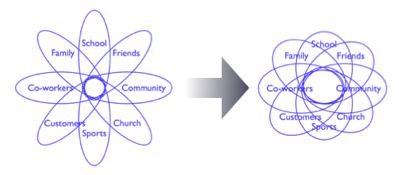
The comments to both this post and Hyatt’s earlier post about his dilemma make for interesting reading. How we relate to each other in online sites like Facebook is in my mind a key part of how we build our online identities as we all live in this increasingly interconnected space. As I wrote about back in January 2009 in a post “The blurring of our lives: Does learning info about co-workers via Facebook improve connections? Or feel creepy?“, the different contexts in which we have traditionally interacted with people are all crashing together. The larger ramifications of this on a cultural level are still to be determined.

blurringofourlives.jpg

MY OWN CASE

Now I’m obviously not the CEO of a publishing company and don’t have quite the high public profile that Michael Hyatt has. But I do have a public profile… through my various online sites and blogs, my weekly reports into the FIR podcast, my fairly heavy use of Twitter, my very public persona for Voxeo in blogs and Twitter and various other ways that I generate content online. Will all of that online extroversion do come the many Facebook connections (and connection requests) from so many people. Through all of that, I’ve made some wonderful connections – many of which started online and grew to include face-to-face meetings at various conferences or events. Some of those relationships have remained entirely online but have grown to become what I would consider true friendships.

And yet in other cases I’ve received connection requests from people who “follow” me in some context… perhaps Twitter… perhaps FIR… perhaps my various blogs… and I haven’t really known how to handle them.

Now I’ve always applied fairly stringent criteria to whom I accept connection/friend requests from on both Facebook and LinkedIn. A number of years ago, I wrote about how “promiscuous linking” weakened the “web of trust” within services like LinkedIn. And I’ve applied that in LinkedIn very strongly… with perhaps only 1 or 2 exceptions that were accepted in moments of weakness, I know personally and have interacted in some capacity with the 500+ contacts I have in LinkedIn. I don’t accept someone’s connection request unless I do know them.

On Facebook, it’s been similar: I’ve been fairly stringent about who I accept as a “friend” – although I admit that in the early days I was a bit more open. I joined Facebook several years back shortly after it had been opened up beyond the college/university crowd and there was a good-sized group of us trying to figure out what this Facebook thing was all about – and also how it could or could not be used for business communication. So for a while, I was accepting many friend requests from people I knew only peripherally, many of whom Hyatt would have termed acquaintances at best and perhaps really more “fans”. Add to that… all the people I know who are friends, but are friends from different contexts… and it gets interesting.

In the words of Facebook… “It’s complicated.”

MY CHANGING USAGE OF FACEBOOK

Along the way, I’ve found that the way I use Facebook has changed somewhat dramatically. In the earlier days, I was exploring it mostly as a business communication tool. My updates… my applications… my notes… all of them were much more business-focused. (And many of my friends probably view my newsfeed today as mainly that… although I can assure them it was more so in the past.)

But somewhere along the way… perhaps sometime after I made my abortive attempt to connect my Twitter firehose directly into my Facebook status updates for a few weeks (resulting example (one of many): “Dan, we are friends, but man, your updates are killing me – you’re making up over 90% of my news feed!“), I found that I wanted to use Facebook differently.

I have found that I want to retreat inside the walled garden of Facebook (even while despising walled gardens and fearing for the future of the open Internet)… that I want to share more private information with a smaller group… that I want to share photos, perhaps even of family… that I want to engage in deeper conversations with people I know well – and through that come to know them better.

In part, I’ll credit my wife for some of this change. An artist whose eyes routinely glaze over when discussion turns to the online world I live in, she resisted joining Facebook for ages. When she finally did recently, though, she became a very active user… and in watching her interactions I saw more of the possibility for deeper interaction. It’s been fascinating, really, to see how she uses it.

THE PUBLIC/PRIVATE DILEMMA

My challenge, of course, is similar to Michael Hyatt’s: How do you create a private space in which to have deeper interaction while also simultaneously nourishing and expanding/growing your public persona and public interactions?

Like Hyatt and many of those commenting to his posts, I have a VERY deep and strong aversion to Facebook’s terminology of a “Fan Page”. I’m NOT a celebrity. I want people to be able to interact with me publicly… yet I don’t want them to have to use the bizarre terminology of calling themselves a “fan” of me.

It’s the word “fan” that gives me the most trouble.

Being a “fan” has an implied endorsement… a positive feeling. You are a fan of someone or something… you like it… you support it… you endorse it. It makes me uncomfortable.

The “follower” term of Twitter or “subscriber” term of Friendfeed are far less emotionally loaded.

Perhaps if Facebook, in their current lust to become Twitter, could move to talking about “Public Pages” and letting people “subscribe” instead of become a “fan”, those of us uncomfortable with the current terms might more readily make use of the function within Facebook.

SO… WHAT TO DO?

I don’t know.

I do know that probably in the last year or so, I’ve become even more stringent in who I accept as a Facebook “friend”. My criteria has become:

  • Do I know this person well?
  • Do I know them well enough that I am comfortable sharing with them personal information about myself?

If the answer to either is “no”, then I either “ignore” the request or, in some cases, just park the request in my “Requests” area of Facebook waiting to make a decision.

This has from time to time put me in the uncomfortable situation where there have been people with whom I have peripherally interacted – and with whom I would perhaps like to interact more with – but with whom I don’t yet have that comfort level. For those folks, I’ve perhaps tried to interact with them more on Twitter, where through @replies you can interact with people very easily without needing an established relationship.

As noted above, I don’t like the “Fan Page” idea… and so I still don’t know how to interact with those who want to engage with my public persona – and with whom I would definitely like to interact in that persona.

Or is perhaps the whole idea of private versus public interaction one I need to simply discard when it comes to Facebook?

We do, indeed, live in interesting times… and sorting out all these different ways of how we interact with each other in this blurred world will definitely take some time.

What do you do? If you have a public face, how have you separated your private versus public interaction in Facebook? Or have you not?


If you found this post interesting or useful, please consider either subscribing to the RSS feed or following me on Twitter or identi.ca.

Revisiting “The Dark Side of Status Updates” – a home potentially burglarized after Twitter updates

Back in November 2007, I wrote a post here called “Twitter is Terrific for Thieves – The Dark Side of Status Updates” about the danger in giving away too much information on Twitter (and Facebook, etc.) and how that could potentially lead to someone burglarizing your home. At the time it led to some interesting conversations on Twitter and in the comments.

Fast forward 1.5 years and many million more Twitter users… it appears (and I must emphasize appears) that precisely that kind of thing did happen in Arizona:

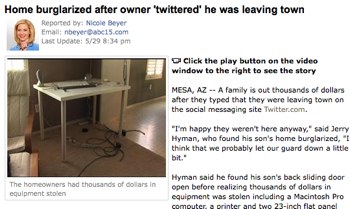
Home burglarized after owner ‘twittered’ he was leaving town

twitterburglery.jpg

The homeowner very unfortunately was robbed of thousands of dollars of equipment. The Twitter connection was mentioned here:

“Every one of them that reads my tweets that I sent out knows that I was heading out of town,” said Hyman, “I’ve got it set-up where Twitter goes into Facebook, so it could be someone I know about on Facebook.”

However, and this is the part that needs to be emphasized, there is really no way to know if the thief/thieves were watching Twitter or if it just happened to be a random theft. As the article says:

Unless the crooks are caught, Hyman said there’s no way to know for sure if this was a random act or if he was targeted.

And that’s exactly right. It might have been someone who saw equipment in the house through windows. It might have been someone who knew there was a tech business operating out of the house. It might have just been someone randomly breaking into homes.

Or it might have been someone monitoring Twitter.

We may not ever know. As I mentioned in my original post, though, it’s important to think about what you say in Twitter or Facebook status updates. Do you really want to tweet that you home is going to be vacant for the next two weeks? Do you want to post the update that you had to leave the 72″ plasma TV on the back porch until you could clear up the wall space? 🙂

Ah, the brave new (open) world we all live in…

P.S. Hat tip to Todd Van Hoosear for re-tweeting about this Arizona article


If you found this post interesting or useful, please consider either subscribing to the RSS feed or following me on Twitter or identi.ca.


Technorati Tags:
, , , ,

Speaking tomorrow night at Keene Public Library: “The Big Disconnect – How Communication Is Changing All Around Us”

UPDATE: Just confirmed that the start time is 7:00pm versus 6, which is what I thought it was, but I was writing my post based on info on the library’s web site. 😉


If you are in the area of Keene, NH, tomorrow night, Monday, April 13, 2009, you are welcome to swing by the Keene Public Library at 6pm7:00pm to hear me speak on: “The Big Disconnect – How Communication Is Changing All Around Us” where I’ll be talking about who the ways we communicate and the tools we are use are changing… basically the topics I write about here, over at DisruptiveTelephony.com, in my FIR reports and essentially in most of the other places I write. The full abstract of the talk is below.

This whole thing started off innocently enough. Another parent at my daughter’s school knew about the kinds of things I do and asked if I would be willing to talk to the library board (on which she sits) about changes in communication technology. They are apparently doing some long-range planning over these next few months and she thought my input would be helpful. My first response was (and still is) to suggest they talk to my neighbor and long-time Keene resident Jon Udell who has, among other things, created the LibraryLookup Bookmarklet Generator. She appreciated that info but continued to also want me to talk to the board.

Given that this is the kind of presentation that I do on an ongoing basis anyway, I agreed. Then somewhere along the way it seems the library board morphed this into a public presentation… when she asked me for a headshot and bio for flyers, well, I knew it was getting a bit bigger… 😉

Ah, well… it didn’t and doesn’t matter to me. If I’m speaking to five people or 20 and private or public, it should be a good conversation regardless. Having this presentation has also been helpful in that it has helped me synthesize some points that I’d been thinking about for some time into a more coherent form.

So at this point it’s a public event to which anyone can go. If you find yourself in Keene tomorrow night, feel free to stop by. Here’s the abstract of the talk:

Is the future of our inter-personal communication a ‘tweet’? Are we going to become ‘friends’ with everyone through sites like Facebook? What are all these ‘feeds’ people are talking about? And what is going on with all these e-books?

We are living in a time of great change both in terms of the technologies and tools we use to communicate but also in terms of the changes those technologies are making to the fabric of our society. Traditional media outlets are under severe stress. Newspapers are folding or stuggling. Television audiences are fragmenting and moving online. Radio empires are collapsing. Email is dying under the weight of spam. Landlines are being cut in favor of mobile phones. In the midst of all this change, people are sharing details of their lives in social networks like Facebook and MySpace. They are ‘tweeting’ with Twitter. They are posting video to YouTube. They are collaborating using documents ‘in the cloud’. They are networking on LinkedIn. They are blogging and podcasting. They are sharing and creating information in so many new forms and ways.

In this talk, communication technology expert Dan York will discuss these trends and technologies and look at how both the ways in which we communicate are changing as the underlying technology changes. What is fueling those trends? How are people changing the way they consume information? What does it mean for each of us as we blur the contexts in which we interact with people? What are both the challenges and opportunities for organizations and businesses? What are some of the societal impacts? What about privacy? (Or is there such a thing?) And how can people most appropriately participate? Come with your questions and join in the conversation about how communication is changing all around us.

P.S. I don’t know that I’m entirely comfortable with the label “communication technology expert“. I suppose some people may consider me that, and I have been working with online communication networks and tools for pretty much 25 years at this point… but from my perspective the more you know, the more you know you don’t know…


If you found this post interesting or useful, please consider either subscribing to the RSS feed or following me on Twitter or identi.ca.


Technorati Tags:
, , , , , , , ,

Topics and links for my FIR report into show #432- March 19, 2009

fir_100x100.gifToday I sent over to Shel Holtz and Neville Hobson my usual weekly report into For Immediate Release. In my actual report, I said I’d post the links to the reports that I was talking about in the report. They are:

Now, as to what I said about each of those…. well, you’ll have to wait until Shel & Neville edit/produce FIR #432 and post it on the FIR site sometime today. 🙂


TIP: As you’ll hear in the report, I recorded it in the field. I did so using the iRecorder app on my iPhone which I’ve used in the past. The neat thing about iRecorder is that it’s trivial to get the files off the iPhone – the iRecorder app simply runs a local web server on your iPhone and you connect to that web server from another PC on your local network.

However, as I discovered today, that is the only way to get the recordings off your iPhone and so if you don’t have WiFi access… or more specifically unrestricted WiFi access… you are out of luck.

Today I recorded this segment en route to my local Panera Bread where I planned to work all day offsite and mostly offline. I figured I’d just transfer the file over the free WiFi and send it off. However, this failed miserably. Both my laptop and my iPhone were able to get on Panera’s free WiFi, access the web, etc. But when I put iRecorder in its “Sync” mode running a local web server and then tried to connect from my laptop, I couldn’t! After a couple of attempts (and a cup of tea) I wound up returning home to do the transfer.

Blame the security folks, methinks. In trying a couple of other connections, it looks like the folks at Panera are very nicely restricting people from connecting to other computers on the free WiFi network. This is a VERY good thing! 99.9% of the time… just not when I want to do a file transfer over the local network. It’s actually good to know and honestly makes me more inclined to use Panera’s network, since they appear to be protecting me from scanning from other computers on the network. It was just not how I thought today would work out. Ah, well. Lesson learned.


If you found this post interesting or useful, please consider either subscribing to the RSS feed or following me on Twitter or identi.ca.


The blurring of our lives: Does learning info about co-workers via Facebook improve connections? Or feel creepy?

facebook.jpgAt what point does all the information sharing in Facebook (and other social media) that is now visible to your co-workers cross over from being helpful in building connections between employees and move into feeling like a somewhat creepy invasion of privacy?

Right now we are living through a grand experiment in blurring the lines between personal and business lives…. between “friends” in the traditional sense, “friends” in the local community, “friends” we’ve met online and “friends” who are co-workers (and in some cases “friends” who are vendors, customers, etc.).

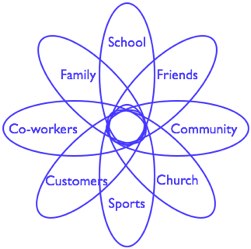
blurring-presocialmedia-1.jpgSure, those lines have always been blurred in some fashion. Many times the people we work with are some of our closest “friends”. For many people who work in jobs in a local community, the intersection of their “friends” between employees, customers, and people they know in the community is very high. The same people come into their store that they see at a local sports game… or see at the local school… or go to the same church with… or see at a local bar.
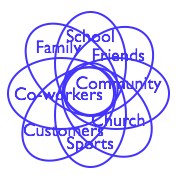
For others, the intersection may be quite smaller. Co-workers may be far away. The job may have little or no connection to the local community. Family may be scattered all over the region, country or globe. “Friends” may be fewer or may be farther apart – or may be more online. In larger communities, especially, you may go to a church on the other side of the city and have kids in a sports league in another part of the city and your office may be in yet another part of town.

The degree of the blurring has a lot to do with the size of the local community you live in and the degree of your connection to that community. You may not attend a church… or play in a sport (or have kids that do)… you may not have kids and not have the school connections.

The point is that we’ve typically have different groups of people with whom we’ve shared different pieces of information. We know people in different “contexts” and share information with them in that context and often that context alone.

This is particularly true with the divide between our “work” and “personal” lives. Sure, we’ve always shared some parts of our personal life inside the walls of our “work” environment. We’ve talked to our co-workers… gathered at water coolers or in break rooms or cafeterias. Some people have shared very openly about what they are doing and we’ve learned much about their overall personality. Others have remained very private and shared virtually nothing. To some degree, we all have a facade that we construct that is how we appear to our co-workers.

The wall between work and personal lives has been there.

blurring-socialmedia.jpgThat wall is being demolished, though, along with all the other walls, in the new world of social media. We typically have only one Facebook account… we have one Twitter account… we have one MySpace account… and so on. We add “friends” who we know in various contexts to the same account.

Think for a moment about who you have added as Facebook “friends” (assuming you use Facebook). I know my list contains at least this:

  • people who have been long-time friends in the traditional sense of the word
  • people I know through activities related to VoIP/communications
  • people I know through activities related to information security / VoIP security
  • people I know through activities related to marketing / PR / communications / blogging / podcasting
  • co-workers from my current employer
  • co-workers from previous employers
  • several industry analysts
  • developers / programmers I know from various projects
  • people I met while living in Ottawa, Ontario, and Burlington, VT
  • people with whom I was involved starting up a curling club in VT
  • a couple of extended family members
  • an increasing number of people I grew up with back in the 70s and 80s, some of whom are probably wondering what in the world it is I do now
  • people I’ve met at various conferences and became friends with
  • a few people from Keene, NH, where we moved this summer
  • other people I’ve met randomly in some context and become friends with

It’s a diverse list of people… and yet they all see the same information in my Facebook NewsFeed. They see the same
status updates… they see the same photos I post… the same Notes I import… the same del.icio.us bookmarks… the same videos I create.

The many different contexts are blurred into one.

Now maybe this is a great thing… we all get to learn more about each other – and the person behind the facade that we construct for each context. Or maybe are we learning too much. Where is the line?

Going back to my original question at the beginning… within Facebook the “25 random things about me” meme seems to be going strong in recent weeks, at least among the people to whom I am connected on Facebook. You know, it’s the “here are 25 things about me that most people don’t know”. We went through a whole string of memes like this out in the blogosphere a few years back and now and then they keep surfacing.

Anyway, the few posts I have had time to read in Facebook lately have actually been quite fun to read. I’ve learned a lot about some of the folks… remembered old stories… learned new ones. Some have been discreet in the info shared… and some have been more revealing than I would personally be.

It’s that latter bit that got me thinking about all of this. What if the person sharing the “revealing” information is a co-worker? Do we understand yet how (or if) this changes our relationships? Do I gain more respect learning of a serious childhood illness now overcome? Do I lose respect for that co-worker when I learn of the drunken binges they go on each month? What if I don’t like their politics or religion? Does any of this change the way I interact with the person? On one level, how can it not change my views of that person? – but can I/we move beyond that?

Have our “culture” and “conventions” caught up with the degree of information our tools now let us share?

Where is the line between information we share with co-workers and our “personal” lives? Is there even a line? Or is the very concept of such a line just a quaint anachronism of another era?

P.S. For my own part, I assume there is no line and continue to follow the mantra: “Never put online (anywhere) anything you would not want to appear on the front page of the New York Times.” Perhaps that limits my “openness”, though…


If you found this post interesting or useful, please consider either subscribing to the RSS feed or following me on Twitter or identi.ca.


Technorati Tags:
, , , , , ,

Why does Facebook only let you import ONE blog/RSS feed?

Why does Facebook only let you import ONE feed from a blog or other site? Do they not think that you might have more than one RSS feed you want to import?

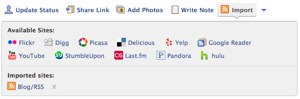
Forgetting for a moment Facebook’s draconian Terms of Service (which can be summarized quite simply as “ALL your content belongs to us – forever and always.” (I wrote about this a year ago or so.)), let’s say you do want to import in posts from your blog. This is quite simple (once you can find the Import tab):

facebookimport.jpg

Click on the “Blog/RSS” link, enter in the URL for your feed and… ta da… your blog posts start being imported as Notes into Facebook. Now all your friends who view the world through the lens of Facebook can also see the content you are writing outside of the Facebook walls.

But what if you have more than one RSS feed you want to import?

Oops.

No can do. You get exactly one “Blog/RSS” feed to import.

So what if you are someone like me who writes in a half a dozen different places (also here and here)? Sorry, but you’re out of luck.

Your options are really to either: 1) only import one of your various blogs, which is what I have been doing to date; or 2) create an aggregated feed of your blogs and import that.

For #2, you then must go off and create that aggregated feed using Yahoo Pipes, Friendfeed or any of the zillion other services out there. I recently decided to look at this again and immediately thought of my FriendFeed feed at friendfeed.com/danyork since I already use that service to aggregate my online writing.

The problem is that the way I use Friendfeed is as a giant fire hose that aggregates everything I write or publish publicly online. This includes duplicate items such as my twitter and identi.ca feeds (which are usually, but not always, the same). Pointing Facebook to my Friendfeed feed would wind up with all sorts of duplicate material entering Facebook (especially as someday in here I’ll sort out the Facebook <-> Twitter infinite loop I’ve created and get the interconnect happening there again).

Now in Friendfeed you can “hide” certain items from a feed from someone else… but I’ve not figured out a way in Friendfeed to do that in a feed of your own. So, naturally, my kludgey solution today was to:

  • Create a second Friendfeed account and keep it a private account.
  • Subscribe it only to my main Friendfeed account.
  • Hide the various things in my main feed that I don’t want to see (i.e. Twitter, identi.ca)
  • Take the resulting RSS feed from this second Friendfeed account and give that to Facebook to import.

Ta da… blog-only aggregation accomplished in about 5-10 minutes of mouse-clicking.

But what a kludge! (And yes, I could have probably done this even simpler in half a dozen other sites…)

Wouldn’t it be so much nicer if Facebook was like Friendfeed and let you import any number of RSS feeds? Take a look at this view of my Friendfeed page:

friendfeedsubs.jpg

All the nice orange RSS icons are for various different feeds I’m importing. Why couldn’t Facebook do something like that? It would be great if they would… and probably would result in more content being brought into Facebook (and helping in their continued battle for world domination. 🙂

What do you think? What do you do if you have more than one blog or feed you want to import into Facebook? Or do you only have one blog? Or are you avoiding importing anything into Facebook because of their hideous Terms of Service?


If you enjoyed this post, please consider either subscribing to the RSS feed or following me on Twitter or identi.ca.


Technorati Tags:
, , ,

Anyone know how to make Facebook Notes import an RSS feed and have it look nice?

Anyone know who to import a RSS feed into Facebook’s Notes component and not have it look horrible? Or is this a WordPress issue?

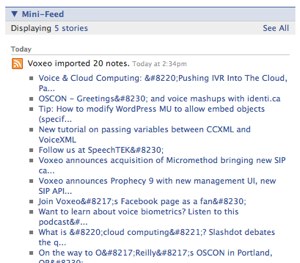
Recently, we created a Voxeo “Page” inside of Facebook and then I edited the settings for the Notes component to have it import the RSS feed for blogs.voxeo.com. Unfortunately, the result looks rather horrid from a visual perspective:

facebooknotesrssimport-voxeo.jpg

What are all those HTML character entities doing there? Shouldn’t Facebook interpret them correctly as the appropriate characters?

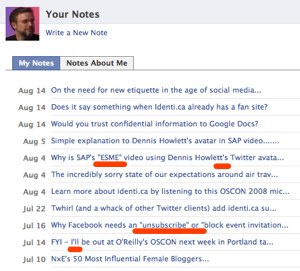
I wonder, though, if this is a WordPress (or WordPress MU) issue. When I look over at my Facebook profile and my Notes page, I also import a RSS feed there, but it’s for this Disruptive Conversations blog that is hosted on TypePad. So a different blogging platform is generating the RSS feed. And the Notes page displays fine. In the image below, I’ve underlined (thank you, Skitch!) characters that are causing problems in the Voxeo feed:

facebooknotesrssimport-typepad.jpg

So given this, I’m inclined to think that WPMU might be overly aggressive in converting characters to HTML character entities. But wouldn’t you think Facebook should be able to properly render those character entities?

Any suggestions on what I can do here? (Thanks in advance.)

Technorati Tags:
, , , , , , ,

Why Facebook needs an “unsubscribe” or “block event invitations”…

Wouldn’t it be nice if there was a way you could easily ignore/block event invitations from a specific person? Today, Mari Smith directly involves me in a piece on her blog called ”
Facebook Event Invitations – Unsubscribe Option?” that goes right to this point.

THE BROKENNESS OF FACEBOOK

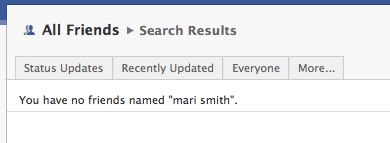
Here’s the thing… I don’t know Mari. That I can recall, I’ve never met her. I’ve never attended any of her online events, nor had I read her blog prior to this morning. Yet inside of Facebook I received the occasional message from her about upcoming events she was doing, none of which were honestly of interest t me. After her latest message about an upcoming event, I couldn’t understand why I was receiving her message. Naturally I tried to see if she was one of my Facebook friends, but of course Facebook’s <expletive deleted> brokenness didn’t give me that answer:

facebook-friendsearch.jpg

I checked my Facebook Groups, too, to see if I had subscribed to any group that Mari coordinated. No luck there. So having no clue why I was receiving these messages, I sent her a Facebook message asking to please remove me from her distribution list, as it seemed to me that somehow I had wound up on some kind of list or group inside of Facebook.

Now, I’m glad I was polite, since my message to her wound up as a screen capture in her blog post today…. (goes back to my mantra “Never put online anything you wouldn’t want to appear on the front page of the New York Times.“)

She wrote back a polite reply, but as she notes in her post, there is no easy way to do what I requested inside of Facebook. There is no way to “Block Event Invitations from this person” or “Unsubscribe”. You can, of course, “un-friend” the person, but what if you don’t want to go that far? What if you only want to stop receiving their event invitations in your inbox? (And what if, as far as you can tell, they aren’t one of your friends?)

Mari says:

With all due respect to Dan, I’m sure he doesn’t know if he had just RSVP’d NO or clicked the Remove from My Events link, he would not receive any further emails.

Actually, I did know this, but it only solves the issue for that particular event. If I RSVP NO or remove the event, I will not receive any more email notices about that event… but in my case, because I couldn’t figure out why I was getting these email invites in the first place, I wanted to not receive any further email messages about any events. (Which sounds harsh, but keep in mind I didn’t understand why I was getting these… see below…)

Mari’s absolutely right that a “Block Event Invitations from this person” feature is necessary. If you have someone who you would like to keep as a contact in Facebook, but you are just tired of getting their event invites, you should be able to block their event invites, just as you can block application invites from a user.

She also suggests to organizers to create a “DO NOT INVITE” list, although I would suggest this should perhaps go the other way… create an “INVITE” list to which you add people – and then remove the ones who no longer want to receive your invitations. That might make it easier when you are creating an event invite.

MYSTERY SOLVED

Now I did figure out why I was receiving Mari’s invites. It’s simple, really…

She is one of my Facebook “friends”!

Yes, indeed, even though a search of my Friends in Facebook tells me “You have no friends named “mari smith”.”, there she was in the S’s when I manually paged through all my Facebook friends.

So that’s why I was receiving her event invites… because I had allowed her to do so… by at some point approving her friend request.

As I mentioned above, as far as I can recall, Mari and I have never met or interacted online. (Apologies, Mari, if we have and I simply don’t remember.) I’m also very definitely NOT one to simply approve a friend request. I usually don’t approve one unless: 1) I actually know the person; or 2) some combination of the following: a) when I look at their profile they look like someone interesting for me to follow; b) they write a very compelling personal message in their friend request; and c) they are also someone who is connected to a number of other people I know.

So at some point in the past something caused me to approve her friendship request. Perhaps it was last year when I was doing a lot more with Facebook and was actually following a great number of people through their status updates, the mini-feed and such. I don’t know, but in any event, there was no mystery involved here (other than why Facebook doesn’t make it easy to find people listed in your own Friends list!)….

FACEBOOK, CAN YOU FIX THIS, PLEASE?

A couple of lessons out of this for me:

1. DON’T RELY ON FACEBOOK’S SEARCH – If you want to find out if someone is a friend on Facebook, click on Friends on the top of the page, then the “Everyone” tab, and then manually page through your friends list (alphabetically sorted by last name).

2. FACEBOOK NEEDS A “BLOCK EVENT INVITATIONS” ACTION – I agree with Mari that this action would great to have for the times when you don’t want to completely remove someone as a friend but you do want to stop receiving their event invitations. (Although I think that an email exchange like Mari and I had is also a great step because otherwise the organizer may still think you were invited and not understand why you haven’t responded.)

What do you think? Does Facebook need this functionality?

P.S. And my apologies, Mari, for not realizing that we were connected on Facebook…

Technorati Tags:

Calling all developers – Social Dev Camp East – May 10th, 2008 – Baltimore

socialdevcampbaltimore.jpgIf you are developing applications in the social media / social networking / web 2.0 space, you should know about Social Dev Camp East, coming up on May 10, 2008, in Baltimore. Some info is in PBWiki, although most of the activity is happening on the Facebook event page. It looks like some great topics and events and given that Dave Troy is one of the organizers, I expect it should be good. Dave’s the guy behind Twittervision and several other sites and is also the one who put the open source Asterisk PBX running on top of a Roomba robotic vacuum cleaner (seriously… “Press 1 to start sucking”!).

On the wiki there are already a bunch of folks signed up and I look forward to hearing about what happens. (I won’t be able to attend due to other commitments.)

Technorati Tags:
, , , , , , , ,